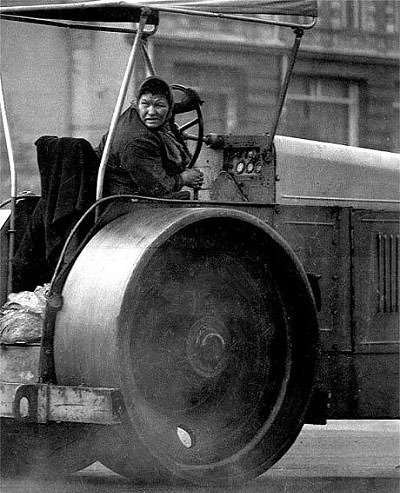
More like: USSR propaganda in 100 photographs. One “man in space” vs millions of people devoid of plumbing and basic products, all living in a repressive orwellian society. The aftermath is still tangible: former satellite states are even after 30 years behind Western Europe economically, the former USSR republics are either marginalised, autocratic or in active war for their survival against their former colonial masters, and of course there’s Russia itself with its utmost lack of respect for its own citizens’ well being. So sure feel free to enjoy these photographs but don’t let them trick you into imagining USSR as some sort of utopia, because it was definitely way closer to an actual dystopia, and the world is now an actually better place because USSR is no more
It was far from utopia but it wasn't orwellian. It was different in a way that's hard to explain if you didn't experience it. The lack of public goods, lower living standards, and the oppressiveness of the state were somewhat compensated by the peace of mind coming from knowing that you couldn't become unemployed or homeless. This is what a lot of people miss when they say they miss USSR.
Soviet union had homeless and unemployed people, It was a criminal offence with prison terms starting at 1 year in colony. There was even a law specifically for gypsies where punishment for unemployment was 2-5 years in siberia.
Yes, it was a criminal offense since 1961 (I didn't hear about a special law for gypsies but it could be). So there were homeless and unemployed, but only those who really wanted to be. It took effort.
Is plumbing seen as the pinnacle of human development? We lived without it until the late 19th century whilst in Mesopotamia they had sewage systems, plumbing and even toilet bowls 5000 years ago. The Romans sewers built before the birth of Christ are still in use today.
Note that even today hundreds of millions in India and China still don't have access to modern toilets or sewage systems.
I’m not sure about the pinnacle, but for me plumbing definitely makes it to the list of the top 100 most important human achievements, at least as far as sanitation, health and quality of life goes
You’d be surprised how many people there are in the West who picture USSR as some kind of a magical world run by elves and fairies. Left-leaning French academics is one such group worth calling out directly. Their (partly justified) hatred for capitalism plus the lack of direct exposure to communism causes some real cognitive distortions
I suppose you were the one who flagged this. I had a business in the former countries of the USSR, traveled there many times, some of the women were stunningly beautiful, I married one. These photos bring back lots of memories.
>vs millions of people devoid of plumbing and basic products
Quite the opposite: millions of people got electricity and plumbing in the USSR era, that lacked before.
>The aftermath is still tangible: former satellite states are even after 30 years behind Western Europe economically
And how are the Latin American 20th century right wing countries doing compared to Western Europe?
Funnily forgot how most of the Western European countries had massive colonies funding their earlier development, which the eastern european countries lacked.
I grew up in an ex-eastern bloc country, so I’m familiar with some of the aesthetics and even echoes of the Soviet mentality. The images fill me with despair. So much human potential wasted.
Me too, Poland, but I don't share the sentiment a bit.
I'm not denying things are better now, but they are also much more complex, people socialize way less, neighborhoods that were filled with life are now filled by cars taking any corner and you barely see anybody sitting outside and just talking.
People are way more anxious and less happy, have no kids at all.
Are we better overall? Sure. If you look at the financial angle we are.
Look, you had PRL back then and some basic freedom. It’s quite different status than the countries under direct control from Moscow. People had kids, but didn’t talk either. Why? Because you didn’t want to be reported to KGB by your friendly neighbor. Who accidentally visited you during Xmas Eve and didn’t leave before midnight. Maybe for you the collapse of USSR is not that big thing. But for your northern neighbors it is!
>they are also much more complex, people socialize way less, neighborhoods that were filled with life are now filled by cars taking any corner and you barely see anybody sitting outside and just talking.
People are way more anxious and less happy, have no kids at all.
This is also the contrast you can see in countries that didn't live under a single-party rule with a secret police that can disappear you at any moment.
What you describe is the disease of modernity, and you wouldn't get a safer happier result if the USSR was back or never disappeared.
That’s a false comparison. People socialising less today has nothing to do with the end of communism. Poland becoming freer, safer and vastly more prosperous is a lot more than just a “financial angle.”
Picture 9 with 12 string electric guitar. Extremely rare instrument. Normal 6 string electric guitars were very average quality. Rock music was anyway not desired. Coming from the wrong place. Every piece of popular musicians was reviewed by state organs. Endless censorship everywhere.
What's going on with the photo of the children standing around a light wearing sunglasses? My first thought was tanning booth but surely they weren't tanning children?
Likely it was UV exposure to raise the kids vitamin D. I'm guessing this was something for northern parts of russia. (Yes, they were tanning the kids :D)
Skin cancer from sun exposure wasn't something I think they'd have considered in the USSR.
I watched "Russia 1985–1999: TraumaZone - What It Felt Like to Live Through The Collapse of Communism and Democracy" (7 episode documentary series) last year and can highly recommend it. It's not like any documentary I'd ever seen, there is no narration, very little "story" exactly, it's mostly a collection of footage spliced together (I believe it was all/mostly BBC footage, a lot of it seemed like b-roll-type stuff).
I found it absolutely fascinating. After the first episode I didn't think I'd watch anymore of it since it's very odd (how it's presented IMHO) but it kept drawing me back in.
Something I noticed in Star City was how well they managed to find the aesthetic from the time of the USSR.
A set designer can of course find pieces from the time, but I always find with shows made now it always feels retro rather than authentic, but in this show they managed to find some genuine time capsules.
These kinds of articles are only popular in places that had no direct experience of life in the USSR. No one in Latvia, Poland, Czech Republic, etc. looks back on the time with fondness.
I've lived in Poland for the last decade. I'd say 95% of the population looks back on the USSR era with negative views. Poland probably has the best situation it's been in for hundreds of years.
The opinions of 20 year olds that weren't alive during the USSR era do not count.
Of course, why would I, a Pole from as many generations as I can go back in time, know about it better that an expat?
1. Living in Poland does not mean knowing how Poles think about it
2. > I'd say 95% of the population looks back on the USSR era with negative views
This is wrong, opinions about PRL have always been mixed and highly influenced by demographics. [1]
And they shifted in time. 2014 was the first time more Poles had a negative opinion on PRL than a positive one, similar polls in 2009 and 2000 had much more people seeing the PRL positively (and better than democratic Poland). [2]
3. The opinions of 20 year olds that weren't alive during the USSR era do not count.
True, very true! And ironically this is probably where your wrong ideas come from: talking to your millennial coworkers likely in some tech hub or getting randoms opinions over the internet.
Stats show that people that were at least 15 by 1989 have warm or mixed memories about PRL. It's actually younger generations that learn it by history rather than experience to hold negative ones.
And this shift is even harsher after 2014 and 2016 as there's less people who lived those times polled and more youth that didn't, let alone the Russo-Ukrainian war pushed more people into harsher stances.
Let me tell you how things are: life in Communist Poland was ok, people had jobs, had roofs on their heads, had hobbies, did sports, made friends, love, went on vacations. Lives were normal.
Are things better now? They are.
But to imagine communist countries as some bleak grey dystopia ala papers please or Orwell's 1984 where people were unhappy is nonsense. Believe it or not people had normal lives, with jobs, roofs on their heads, making friends, love, going on vacations, playing sports, cultivating hobbies, etc.
I see this every time the topic of communism in Eastern Europe comes up on socials/internet: people that didn't live the era, nor the country, nor the system, speaking about how the people that lived it feel or think.
So many false assumptions about me and my background, and so much false nostalgia. I am Polish-American, I speak Polish, my girlfriend is Polish, so yeah, my opinion is just as valid as yours.
I don't have "millennial coworkers" nor do I attend a tech hub.
Especially absurd when the ongoing war with Russia. It wouldn't surprise me if Polish opinions of Russia were 99% negative.
2014 was 12 years ago. Poland is an entirely different place now. Perhaps you should update your opinion sometime. No one said it was a warzone dystopia, just that it was a darker time compared to today.
The "nostalgia" for those times is basically just nostalgia for the past; American "I miss X" views of the same time period are basically the same, meaning it has more to do with global culture and technological development than some specific thing about the USSR. And of course anyone with the slightest bit of political opinions doesn't miss that era.
Nope, having lived here for a decade with a polish girlfriend doesn't make you an expert in polish society.
Not having had generations and generations of Polish parents and grandparents and great grandparents to intimately understand their daily lifes over decades and their times removes the entirety of the elements you need to understand the topic. You simply don't have it. The same way you don't have any data (which I posted) to back your first statement.
I stated this already, since you might've skipped it:
> Stats show that people that were at least 15 by 1989 have warm or mixed memories about PRL. It's actually younger generations that learn it by history rather than experience to hold negative ones.
> And this shift is even harsher after 2014 and 2016 as there's less people who lived those times polled, let alone the Russo-Ukrainian war pushed more people into harsher stances.
So not sure, how are you disagreeing with me thre.
But facts are facts this line of yours is BS:
> No one in Latvia, Poland, Czech Republic, etc. looks back on the time with fondness.
That no one is false. Older people that lived those times often do. This is a fact shown by all polls you will be able to find online. And also by my anecdotal recollection of virtually every 60+ people I know.
So stop spreading falsehood about topics you don't know.
And I say it as a child of two Poles that escaped communism, my father hated it and hated the idea he could not be an entrepeneur and buy himself a Mini Morris car.
You americans are obsessed by over simplified white vs black, winners vs losers narratives and speaking in absolutes. History is more nuanced.
In my experience those are the people who miss the "good" old times, when everything had order and hierarchy. Wikipedia says the communist party in Poland had 3 million member which is about 10% of the population at the time. If you add the family members and close relatives, the number of people living a privileged life was quite big. Red nobility is known phenomenon in former communist countries.
You can look and Google for many polls conducted on the topic, 2014 was the first year more Poles had a negative than a positive opinion on the PRL (46 vs 44%) and that's because as time progresses average voter age goes down.
People that were at least 15 by 1989 (the last year of communism in Poland) had a warm opinion on it.
It's really younger generations that did not live in PRL that hold overwhelmingly negative opinions on it.
In any case, I'm not sure why am I arguing with you? I'm Polish and my family lived those eras, so did my friends and their families.
Simple fact is: during communism people enjoyed fair lives, there was lots of safety, everybody had a job and a roof on their head and could afford one vacation per year. People made friends, sports, had hobbies and they were younger, so they remember the times as okay.
On the other hand, people that did not live them, base their opinions on vibes and their external idea of how it was to live under PRL.
Look, nobody is saying that life isn't better now, of course it is. But don't believe it was that bad. It was called "second" world and not "third" for a reason. It was okay.
Yet in yanks minds we were living some dystopia were everybody lacked everything and was unhappy and their neighbour was gonna report them for anything.
Funny to see how far I am downvoted for stating the obvious: if your family was doing well while everybody else was worse under an oppressive regime, they were certainly doing something for the oppressive regime...
It would be more obvious if someone was talking about their family living a "happy life" during apartheid or in North Korea.
This topic is very interesting. People from former Soviet states learned what and when to say. Sometimes in brutal inhumane way. Saying that dad brought some sausage or construction material from work was a thing kids learned not to say in public very early. There were many things no to say. Like Xmas or Easter celebrations were topic for family members only. Burial with a priest was tabu. Grandfather fighting Soviet occupation was a big secret kids never knew about. Knowing that having and reading some books were a way to have big troubles. You needed to get mature quickly to live normal life under Soviet occupation. It was really shocking when I arrived in West Germany that guys in their 30s were behaving like Soviet teens.
It actually is a bad experience to live under a totalitarian regime in fear of disappearing forever if you said the wrong thing to the wrong person. And it's kinda weird you're minimising that.
That picture is the USSR equivalent of the pictures of clean streets without homeless encampments made in San Francisco when Gavin Newsom cleaned up the place before the leader of the Chinese Communist Party visited the city [1]. Come to think of it that's quite the telling statement.
After Stalin's death in 1953 the higher ups became more preoccupied with fighting amongst each other and maintaining the soviet union's status on the global scene than holding a tight grip on society like their former leader.
Most of the photos appear to be from the Brezhnev Era, when the soviet union already transitioned away from Stalinism.
Also I imagine anyone taking a photo of any of that would find themselves a resident shortly after.
Have you read The Gulag Archipelago? If not you should, it tells you a lot about Soviet prisons and a lot of other things Soviet you might do well learning about. Read it, it is well-written and - at least in my opinion - quite the page-turner. If you don't think you can manage to make your way through consider listening to an (unabridged) audio book version.
I would take an American prison over a slave Labour camp in Stalins Soviet camp with massive death rates. Few American prisoners freeze to death, starve to death or are beaten to death by the guards. Stop comparing American prisions to Stalin gulags or Hitlers concentration camps. They are not the same.
If that is your baseline, so yeah, mostly everything is fine compared to it. It "just" black guys picking cotton while watched by armed guys on horses.
I am sure American slaves were better treated than Soviet goulag prisoners. After all, slave owners didn't want to "break" too much their property.
It is just ridiculous to claim that Nazi germany wasn’t worse than USA under Biden/Trump. Yea, USA has problems and isn’t perfect. But I bet you would personally pick an American prisons over a literal nazi concentration camp for your own family (unless you are a holocaust denier who thinks Nazi camps were nothing bad)
Yes, I have heard a lot about the austerity of life in the USSR growing up in the 1980s. Comparing life in the world of today to what was available , even in the US, is going to look meager. Growing up in a small town in the 1980s in the US our local grocery store could be measured in the 100s sqft (that also sold clothing and was a feed store) . Now in the same area I shop in a store that can be measured in acres with a super Walmart down the street that is even larger and a few other giant stores in the neighborhood (Home Depot, Academy, etc). It will make anything of the time look sparse. Again, not trying to say the USSR had an abundance of merchandise but that they were different times.
You're comparing a (probably rural?) 'general store' in the 80's with current megastores and for some reason link that to the austerity experienced under communism with centrally planned economies. That's a silly comparison since those small rural general stores still exist - there's one a few km from where I live in Sweden which sells everything from groceries to clothes to tools, doubles as a feed store and also happens to sell a few dozen types of lubricants for agricultural equipment, all in a collection of small wooden buildings of the type the Swedish countryside is dotted with - and will hopefully continue doing so in the future. Compare the average supermarket in the USA in the 80's with the non-party-member equivalents in the eastern bloc countries in the same time for a better comparison. I never made it to Russia in that time but I did visit Czechoslovakia and Yugoslavia - both countries no longer exist - as well as the USA in that time and the difference was as clear as daylight. The USA was and still is the land of plenty, even compared to the Netherlands where I'm from and then lived but especially compared to those eastern bloc countries. This was not a matter of 'different times' but 'different political and economical systems'.
It is a bit slow, atmospheric, very long. HyperNormalization or Bitter Lake are probably my go-to starting recommendations for classic Curtis, with a bit more velocity to them. But I'm very thankful for having such a visual history lesson in TraumaZone, for such a found-footage style walk through the years.
They were pragmatic and tried to reform. The problem that China did not have were ethnic tensions. Every SSR believed that it contributes more than it receives from the union and its people are oppressed. The only force holding them together was the ideology.
At times I think about how democracies, especially those plagued by winner-takes-all mechanics like presidential and semi-presidential republics, can pretend to be democratic while de facto being very authoritarian.
In the USSR, workers (in Soviets) voted their delegates and the delegates in turn elected the top hierarchy of the communist party.
So yes, the USSR was obviously an authoritarian regime controlled by a single party, but you still had to lobby and depend on getting elected by your party, whose delegates had to be first elected by the workers.
In modern Russia, Belarus, etc?
It's arguably even worse, the elected presidents and prime ministers de facto control the opposition which pretends to be an opposition, and real opposition faces either legal issues or direct threats.
And yet, you can pretend to be a democracy and tell your people its better than it was once, but is it really?
It's been 60 years now till the last parliamentary republic turned authoritarian, Sri Lanka. Every single other country to do so has always been a presidential or semi presidential republic. From the former Eastern Europe, to Asia, to Africa to South America.
We should now know that electing a single person to hold executive power is just non democratic and concentrates too much power in a single individual, but we keep falling in love with winner-takes-all elections and loving the idea of a single individual that doesn't need to win his own parties or PMs support every day can fix things quickly.
That separation of powers exists and existed in all the modern democratic presidential and semi presidential republics that failed to avoid the authoritarian turn.
Winner-takes-all mechanic are flawed, non representative, breed personal cults, and put power in hands of individuals that are hard to remove (both constitutionally and by them being able to claim popular mandate).
All those republics need to break them is the right person in the right moment.
Numbers and facts clearly show that parliamentary republics do not suffer the same threat as any individual has to win the support and votes of its own party, coalition and parliament every single day and its very easy to remove.
Soviet only had elections on paper. You serious think it was possible to vote away Stalin? You must be crazy if you claim there was free elections and anyone could run against Stali.
> In the USSR, workers (in Soviets) voted their delegates and the delegates in turn elected the top hierarchy of the communist party.
Are you seriously claiming that 'workers' in the USSR had any influence on what happened in the Party? If so you fell for the propaganda and need to read up on the real history of Communism - not Howard Zinn, not whatever the Soviet 'history' books say.


reply